

November 29, 2024
“Recognizing abundance rather than scarcity undermines an economy that thrives by creating unmet desires.” Robin Wall Kimmerer
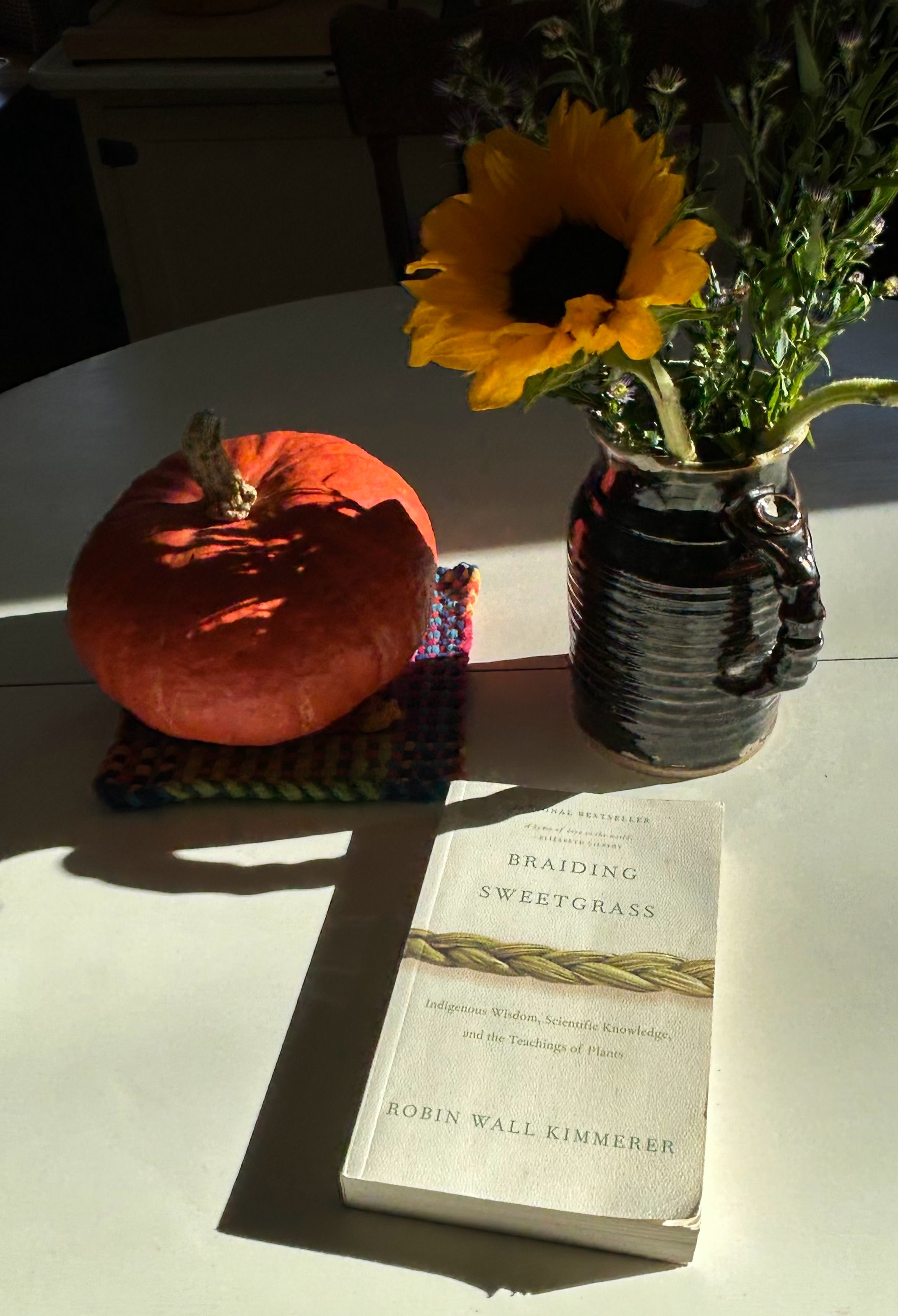
It seems ironic that our country’s greatest day of giving thanks for all of our blessings in life is followed by that dark hollow called Black Friday. On one day we are thankful for the abundance that we have, and on the very next day we are seeking more. It’s the American way, I guess.
In Braiding Sweetgrass, Robin Wall Kimmerer explains the significance of the Haudenosaunee Confederacy’s sense of gratitude that is expressed in their Thanksgiving Address. It is not a one-day prayer of thanks like our typical American one, but rather a recitation that is said by their people when they gather at the start of the day “beginning with where our feet first touch the earth.” It expresses a thankfulness for the gifts of nature that surround them, whether it be the sun and moon or the wind and rain. It honors the plant and animal life and all forms of nature within and beyond. There is no aspect of nature that goes unappreciated.
Here, Kimmerer wonders what life would be like if children were raised in a culture where gratitude is given first priority. She states, “In a consumer society, contentment is a radical proposition. Recognizing abundance rather than scarcity undermines an economy that thrives by creating unmet desires. Gratitude cultivates an ethic of fullness, but the economy needs emptiness. The Thanksgiving Address reminds you that you already have everything you need. Gratitude doesn’t send you out shopping to find satisfaction; it comes as a gift rather than a commodity, subverting the foundation of the whole economy. That is good medicine for land and people alike.”
Reading Kimmerer’s words on indigenous wisdom is like a medicine for a troubled soul. She reminds us that our place in the world is one where nature abounds and where its message can be heard above the strife of the worldly noise about us. It is a noise that wants to distract us from what is true and what is good. She reminds us that our roots are planted in the earth that we live upon as they always have been, and that we should strive always to be better stewards of the things we hold dear. She tells us that all living things upon the earth take from it and then give back in return. The Native American Address reminds us that duties and gifts are two sides of the same coin. For humans, our gifts from nature are many. The most sacred duty we can give back in return is to show gratitude for our many blessings, not only on our day of Thanksgiving but on every day that dawns.
 Garden Writing and Other Wanderings